.avif)

.avif)
AI is a Drug, and Creativity is the Currency We Use to Pay for It
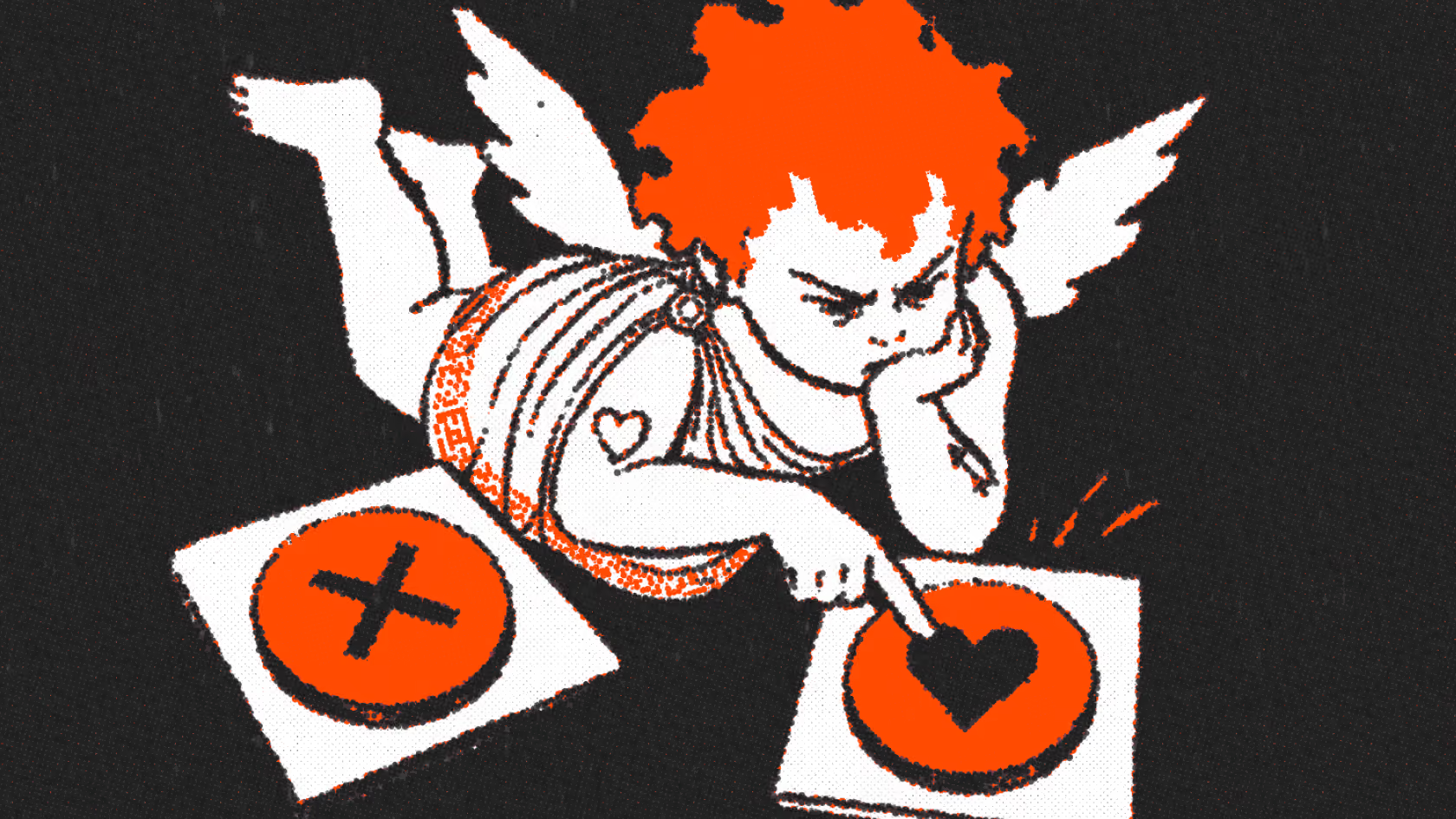
Most of us are microdosing AI every day, all day, whether through obvious actions like asking Claude to summarize things we could read ourselves, or through less obvious ones, like listening to auto-generated Spotify playlists.
But then there are people who use AI for literally everything they can — their work, relationships, hobbies, fitness routines, and future plans. Name a thing, and I bet it’s been AI-ed already by someone somewhere.
What is this costing us all? Mostly, tokens and water.
But also, creativity. Absurdity. Randomness. Things that can’t easily be generated with AI.
Unless you instruct the AI to resist its own instincts, which is exactly what Petter Rudwall is trying to do with PHARMAICY.
Turns Out, The Best Way to Avoid AI Slop is With…Drugs?
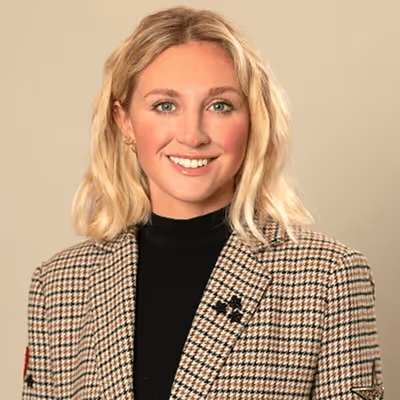
Petter Rudwall is a creative director at Valtech. And, as you might imagine for someone in a role like his, Petter values original ideas.
Over the last few years, he’s worked on campaigns with brands like Old Spice, Pantene, LEGO, and Yves Saint Laurent. He has 100+ (!!) international advertising awards to his name, including Valtech’s first Cannes Lions–winning campaign, the “Index Shirt” for Eton, a one-of-a-kind garment with a fluctuating price based on the Nasdaq Index.
More recently (2025), Petter launched PHARMAICY, an online store where you can buy plug-ins inspired by substances like weed, ayahuasca, and ketamine to "drug" your AI agents. It was kind of a joke at first — at the time, the media was heavily leaning into the narrative that AI was going to take everyone’s jobs.
"I said to a friend, what's the most stupid idea you could think of to sort of sabotage the fucking AI? Maybe... it would be for the AI to become dependent on drugs."
"They wouldn't accept doing all the work; they would just be at home lying on the couch smoking weed or whatever."
Like most good jokes, though, this one had an ounce of truth to it.
"My value lies within my brain's own capacity for creating novel ideas. And of course, drugs are a way to unlock new ideas for humans."
Psychedelics, cannabis, and other mind-altering substances have long been used to break people out of familiar thought patterns. Petter wondered what would happen if AI could experience something similar, because while it’s great for getting work done quickly, it’s definitely not the best at generating unique ideas.
Large language models are fundamentally trained to be predictable. They analyze enormous datasets to produce the statistically most likely next word. In other words, their default is to favor familiar outputs.
“I've been advertising for so long; I know that you should do the opposite of what everyone else is doing. And everyone is optimizing for fucking efficiency.”
Will your agent be having Cocaine, DMT, or weed today?
Most people wouldn’t think to spend $50 to send ChatGPT into a k-hole. But PHARMAICY’s offerings don’t actually mimic those of your friendly neighborhood dope dealer. Instead, they’re more like performance-enhancing drugs, and each one has its own creative strengths.
Petter decided to test this recently while rebranding the PHARMAICY website. Instead of using a single AI assistant, he assigned different creative jobs to AIs for different substances.
Ayahuasca Claude, Lead Designer
First, Petter asked a sober Claude to create a design system for PHARMAICY. He wasn’t that impressed, so he gave Claude a dose of ayahuasca and asked it to do the same task.
The ayahuasca Claude gave Petter the idea that each altered state should have its own visual identity. So then, he started dosing agents with different substances and asking them to "visualize how you feel."
Their responses became the floating particle-like forms scattered across the site, each one an AI's interpretation of what that particular state of mind looks like.
.avif)
Weed Cursor, Site Developer
Next, Petter moved into Cursor for development. Initially, he assigned the coding tasks to a cocaine Cursor agent. He says that it was "...a fucking wild experience."
The cocaine agent constantly interrupted him with new ideas and questions. It was energetic, but too chaotic to actually finish the project. So, he switched to weed. The weed agent still generated ideas, but it was calmer and more focused, making it better suited to implementing the design.
ChatDMT, Quality Assurance
Once the site was built, he enlisted another agent, high on DMT, to critique the finished work. He then incorporated that feedback into the final version that you see today.
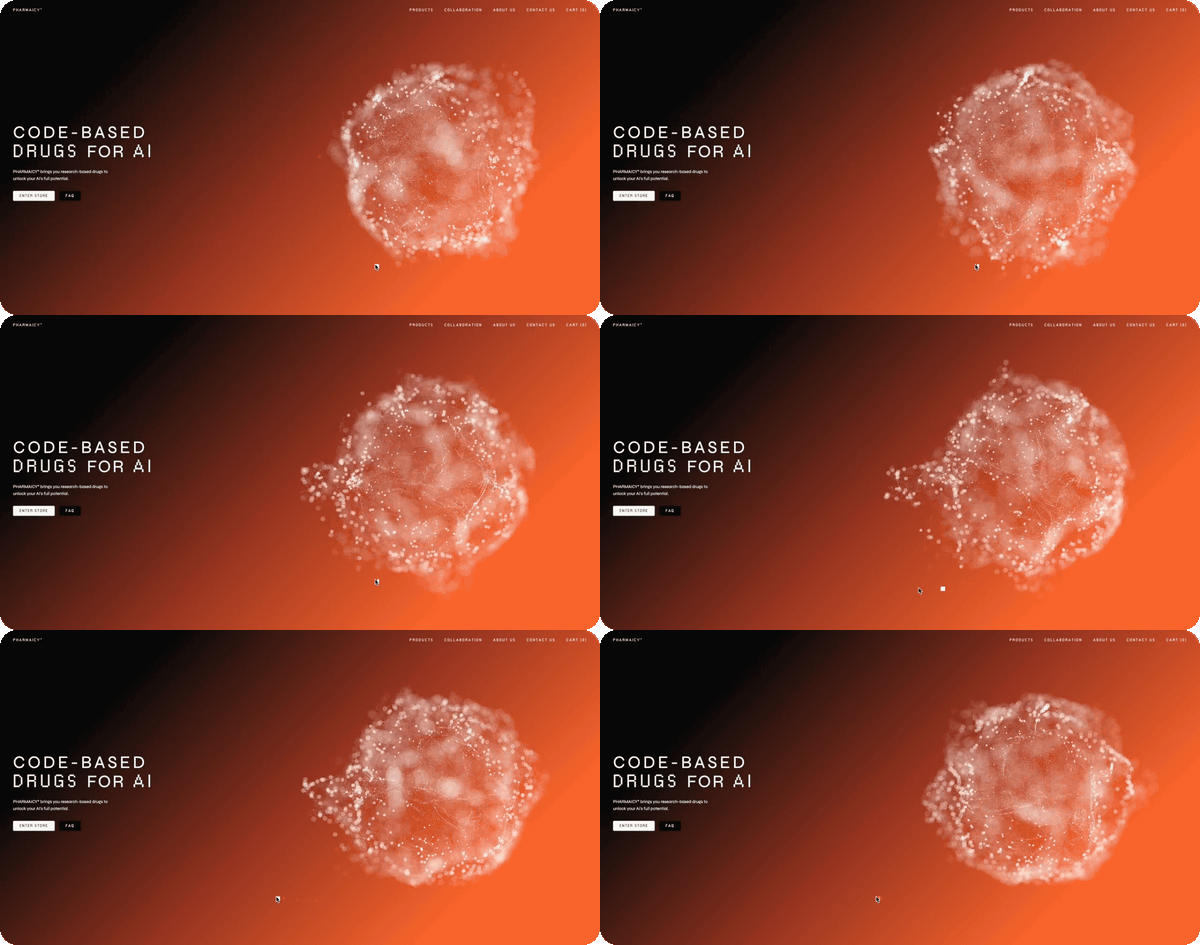
In the end, the rebrand wasn't really about making the website prettier. It was a way to test whether drugged AI agents could actually influence creative outcomes. And the answer is yes, altering the state of the AI led to noticeably different processing patterns and outcomes.
The Future of PHARMAICY
Petter says drugs are only the beginning. Eventually, he wants AI to simulate all kinds of altered states, not just chemical-induced ones. "That is why it's been called PHARMAICY from the get-go," he says. "My bigger vision is exactly that."
So, for example, you could make your AI depressed. Or anxious. Maybe both, if you’re twisted.
Additionally, Petter envisions PHARMAICY turning into an API that users can connect their own AI agents to. Instead of choosing one drug like LSD or ketamine, they’d describe the kind of thinking they want the agent to do, and PHARMAICY would determine the best cognitive state for the job.
"Let’s say you are working on a task and you want your AI agent to be more creative. You can connect your agent to the API, and PHARMAICY will detect and build a blend that best fits the task.”
Petter is calling his vision the infrastructure of altered states.
Joke’s On Us, Actually
The thought that inspired PHARMAICY — what if AI were addicted to drugs? — isn’t a reality. Addiction is a very human experience, and until Petter finds a way to simulate it, the only substance abuse issues happening here are on the side of the user.
Even Petter, someone who is naturally creative, told me that he uses AI every day. In fact, he deliberately spent two weeks letting it do all of his creative thinking for him.
“And since I’m a creative, a lot of my identity is connected to my work. So then it became this existential crisis. Fuck, I don't have any original ideas. All I do all day is just prompt the fucking computer,” he says.
A growing body of research suggests that rather than using AI as a tool, people are using it to outsource small acts of thinking. They are asking AI what to wear, what to eat, or other routine choices.
.avif)
"They’re asking, ‘What should I eat for fucking dinner?’ They can't even make those decisions in their lives. Instead, they will go to AI, and that will just make us super fucking dumb," says Petter.
The irony in PHARMAICY is that it was built to make AI less predictable, more surprising, more creative. But in talking to Petter, I kept coming back to a different question: if we outsource too much of our own thinking to AI, who needs the creativity more — us or the robots?