.avif)

The State of The Date: What Online Dating is Really Like in 2026

In 1993, Gary Kremen was taking a shower when the idea for Match.com came to him. With the help of engineer Peng T. Ong, he built and shipped a beta version of it by 1995. He told Wired that same year, “I thought it would be really interesting to use the Internet for relationships, and to do it right."
The 1995 version of Match.com was pretty simple (there wasn’t an algorithm, only keywords and profiles), but it worked, and it’s what started us on the 30-year path to today.

By 2000, there was eharmony; in 2004, we got OkCupid. Then, in 2009, we got Grindr, which marked another wave of innovation in the dating tech space, not because it was made for gay men — that had been done before by sites like OkCupid, ManHunt, and Gaydar — but actually because it was an iPhone app that used location services.
Soon, there was Tinder (2012), like Grindr, but mostly for straight people. 2014 brought Bumble; then, in 2016, Hinge relaunched — and promised to be “designed to be deleted,” meaning it was your best option for finding a lasting relationship.
If it feels like things haven’t changed much in the last 10 years, that’s because the names are still the same; most people today are using Tinder, Bumble, and/or Hinge.
But — who owns Tinder and Hinge? The Match Group (yes, as in Match.com). It bought the majority stake in Tinder in 2017 and in Hinge in 2018.
So…maybe that’s part of why there hasn’t been much innovation in the dating tech space? But while the apps themselves have barely changed in a decade, the way people use them is constantly in flux, and that’s what we’re really here to talk about today.
2026 STATE OF THE DATE
Call me Carrie Bradshaw, because I talked to as many singles as I could, as well as a professional matchmaker, to understand what it’s like to date today.
Truthfully, it’s not as bleak out there as the internet might have you believe. I know close friends and coworkers who met their partners on the apps, and based on the conversations I had in preparation to write this piece, plenty of people are chatting, going on dates, and hooking up these days.
Based on my interviews, I discovered five truths about online dating: certain aspects of the experience seem universal, no matter the app or match in question.
Pre-date texting is a trap, and everyone knows it
When you match with someone on a dating app, the natural next step is to message them. This is necessary, but tricky, because you might find yourself getting attached to someone who doesn’t live up to your expectations IRL (or worse, ghosts you after weeks of talking).
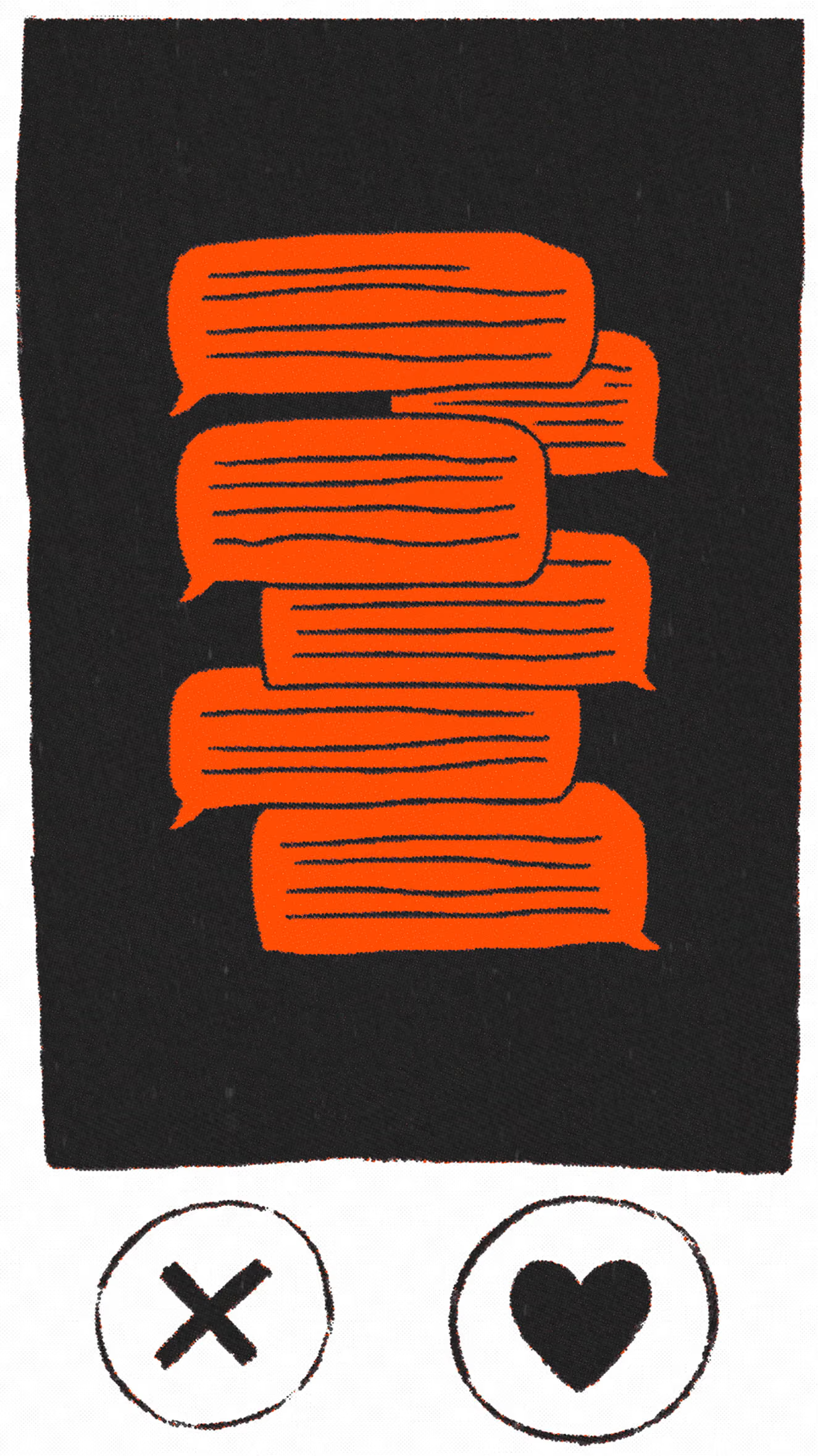
C (29F) described a situation where she talked to a match for weeks before meeting him in person because their schedules weren’t aligned. “We talked all day, every day. He sent me voice notes; I sent him voice notes. I thought we were really clicking.”
“Then I met him for coffee. That was our first date, and we immediately didn't like each other…it only lasted about 30 minutes.”
R (27M) agrees that the ritual of messaging back and forth for weeks before going on a date often feels like a waste of time after meeting IRL.
“The conversations that happen over Hinge just aren't indicative of who they are in person,” he says.
“The vibes are amazing over text — you start to think you’ve met your soulmate. And then you meet them in person, and sometimes it's awkward.”
J (31M) says that he used to ask for matches’ phone numbers immediately so he could chat with them outside of the apps, but that actually led to him being ghosted.
To avoid this, he’s adjusted his strategy: some chatting to suss out the vibe, followed by an invitation to meet up in person after a week or two.
“What I do now is keep the conversation going on Hinge way longer than it should. At some point, they’ll send me their number, and that's when I schedule a date — usually for about a week out. By the time we get there, we’ve been talking a while, so the vibes are good.”
(Almost) Everyone looks up their matches before meeting them
Of the singles I interviewed, 70% confirmed that they look up their matches before meeting them in person.
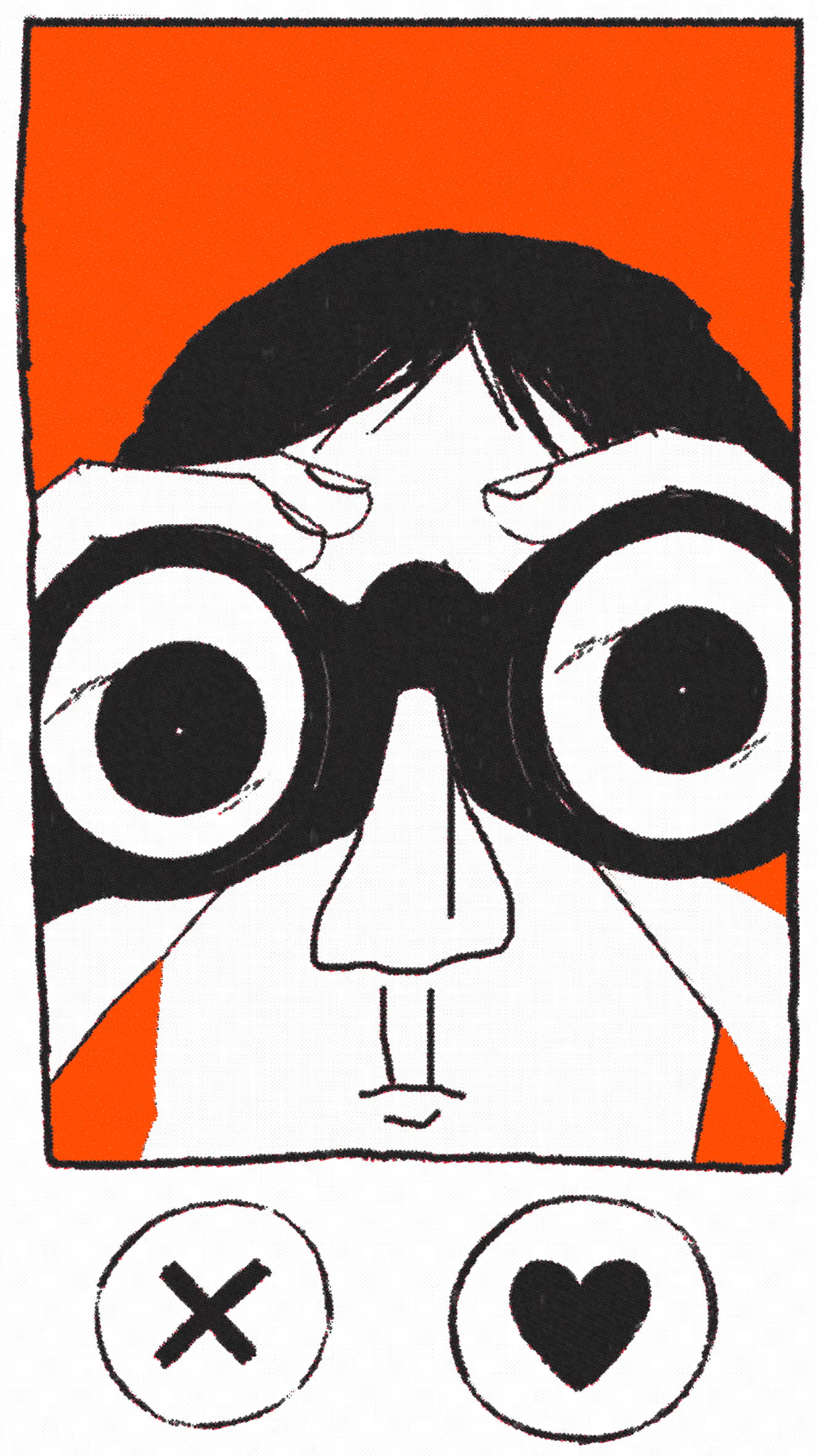
For the most part, they are doing this to confirm:
- That the person is representing themselves accurately, especially when it comes to employment status. F (29F) says, “I look up matches on LinkedIn to confirm that they have a job, and that they’re not lying about it.”
This isn’t uncommon at all. Jessica Strickland, an Austin, Texas-based matchmaker and founder of Matchmaker AI, has spoken to thousands of single people over the last few years. “One of the main things that women complain about is wanting to know that a match is financially stable,” she says.
Jess designed Matchmaker AI so that everyone who joins the platform must undergo a background check. “I think that is something that’s missing from dating apps, and it's going to have to become more mainstream now that AI bots are a thing.”
- That the person isn’t hiding something, like a partner, child, or a criminal charge.
B (39F) has a family member who’s a lawyer, and she uses that connection to access county clerk files. “I will look up their first and last name and approximate date of birth to make sure they were never married…or like, a pedophile,” she says.
- That the person is real. Up to 10% of new profiles created on dating apps are fake, so it’s a good idea to verify that you’re not getting catfished.
A (40M) says that he occasionally looks up women on Instagram to confirm they’re real. “It’s low-key stalking; I have done it before, but I don’t do it every time," he says.
“But sometimes, I doubt myself, and I'm like… man, is this person even real?”
A described a time when a match asked him to come over to her place for their first date — a rare move, because it’s inherently risky. “She was some resident physician or something, and I guess she had to go to work early the next day. But I'm thinking to myself, 'Is this for real? I've never had this happen before.’"
(She was real, don’t worry, and it sounds like they had a nice night.)
The conversation around kids is exhausting for everyone
Everyone has an opinion about kids. Some people won't match with people who have kids; others won't even match with people who want kids.
And then some match with people who say they don't want kids, thinking they'll change their mind.
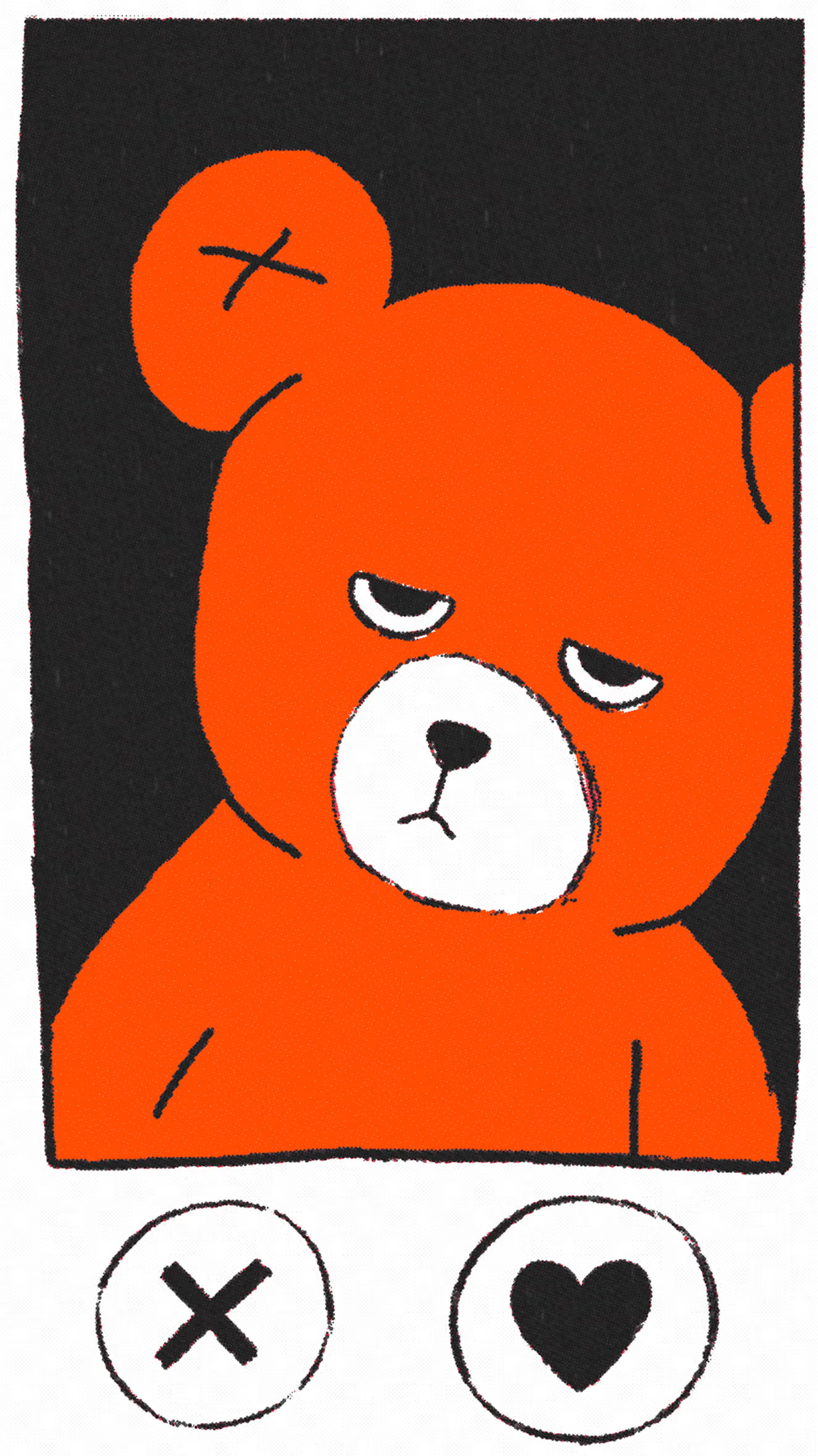
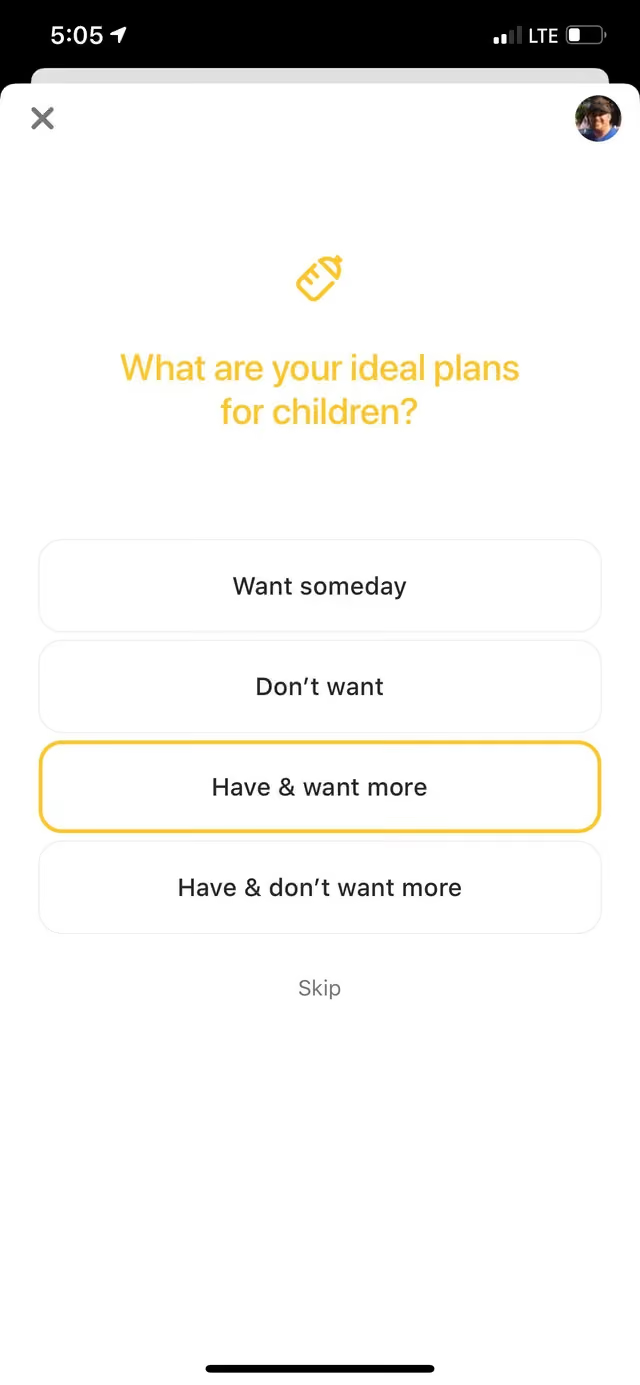
J (31M) says that having children is an absolute dealbreaker for him, but he's totally fine with someone wanting kids in the future. "If she already has kids, that's a no for me. But wanting kids someday? That's normal — that's not a red flag," he says.
R (27M) doesn’t feel the same. To him, even the “want someday” option is a red flag.
"I feel like if you're that upfront about wanting kids, you're not really looking for a connection — like you'd be willing to settle for someone just for the sake of having kids."
Meanwhile, women are usually on the receiving end of assumptions about their preferences around kids. For example, no offense to R, but his idea that a woman would be willing to settle just to become a mom is an assumption.
C (29F) told me about a guy she met on the apps that she’s been seeing on and off for a year.
"We know we won't date long term because we have very different ideas of what our futures look like. He wants kids, and I don't. That's a huge thing for us, but we enjoy spending time with each other."
C’s profile currently says she’s “not sure” about kids. In the past, it said: “doesn’t want.” She addressed this on their first date.
"Right before our date, I was like, 'Hey, I just want to make this really clear — I don't want kids. If this is going to be an issue for you, let's just not waste our time.' And he was like, 'I'm not even thinking about kids, don't worry about it.'"
A month later, he changed his mind.
"He was like, 'The more I think about it, I actually really want kids.'"
Now, they’re in an on-and-off-again situationship. C says they’ll enjoy that until one of them meets someone they feel seriously about, at which point they’ll break it off.
S (40F) has been through some version of this more than once.
"I've run into that before, too — where men just assume that because you're a woman, you'll change your mind about wanting to have kids.”
“I was dating this guy when I was 26, whose entire dream was to move to the suburbs and have kids.”
S describes that as her “literal nightmare,” and says she was very clear about that from the start of their relationship. “Six months in, he was like, 'You're really not going to change your mind, are you?' I said no. Then, we broke up."
Ghosting is a mutual complaint
Matchmaker Jess says that ghosting is an unfortunate side effect of dating people you meet online with whom you have zero social ties.
"Historically, we didn't have social media or even email. So, the only places singles had to meet each other were at church, or community or work events," she says.
"In that situation, you have your social reputation to protect. If you didn’t like a person you went on a date with, you wouldn’t ghost them, because if you did that, they would go back and tell all your friends and family about it."
That accountability disappears completely when you're matching with strangers who have zero overlap with your life.
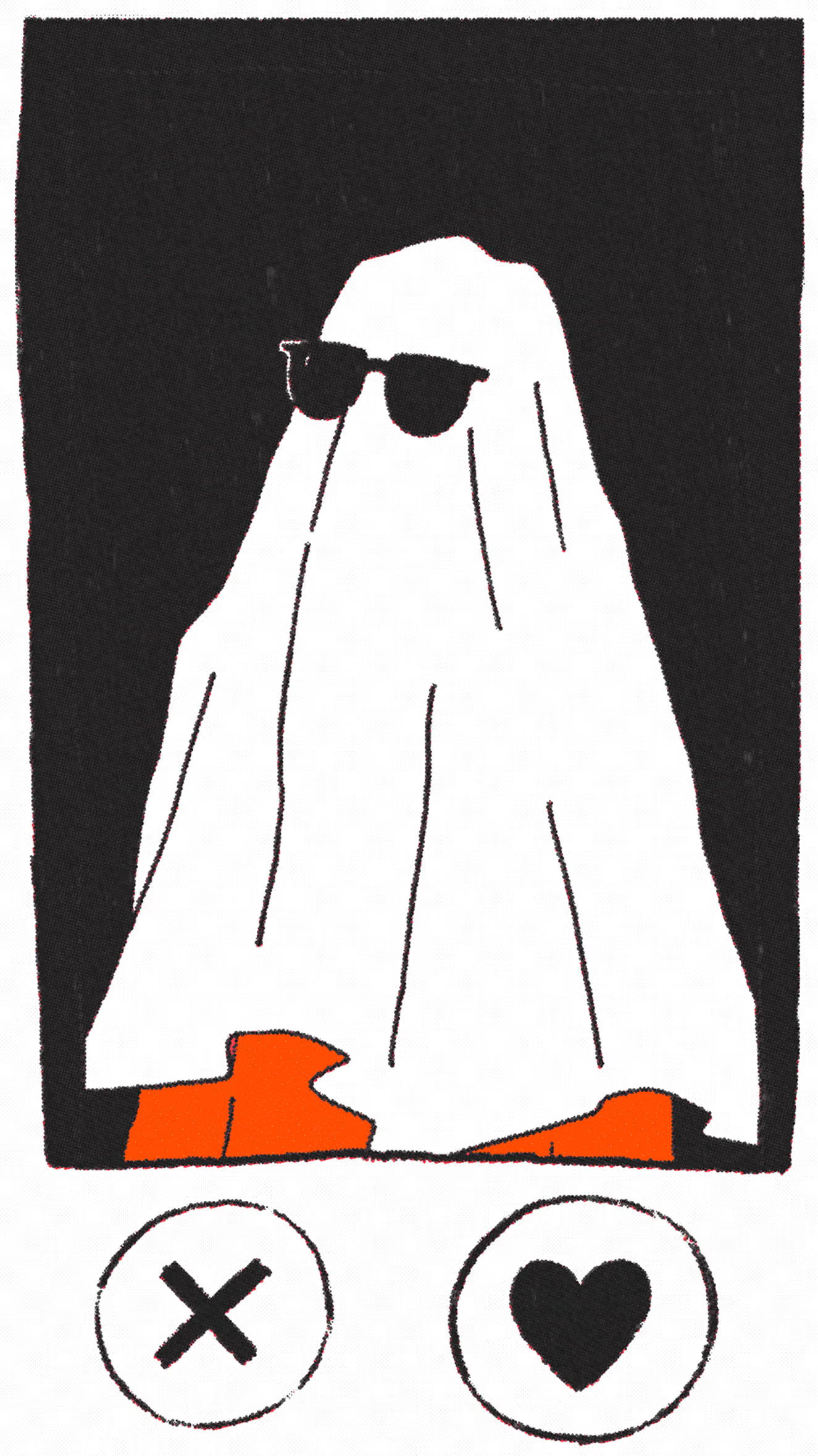
A (40M) describes a familiar pattern where he’ll chat with someone every day for a week, but when he brings up meeting in person, they say they need to talk more first or that they’re not free. So, he’ll wait a week, then ask them out again. That’s when they vanish.
“I think they’re just there for pen pals,” he says. (See: Pre-date texting is a trap, and everyone knows it.)
J (31M) says ghosting feels even worse when money and effort have been put into a date with the person.
"One time, I spent $150 on a date, and I actually thought it went well. Every sign she gave me during the date was that she was having a good time."
"I texted her the next day or a couple of days later, and I was like, 'Hey, had a good time. Let me know if you want to hang out again.'”
She texted back seven hours later and said that she wasn’t ignoring the text, just working.
“And I was like, 'Okay, no worries, just let me know when you're free.' Then she just ghosted," J says.
He never got an explanation for this bait-and-switch behavior, which, unfortunately, is how ghosting typically goes.
Finally, there’s F (29F), who admitted to ghosting a man before their first date. Why? Because she'd spontaneously hooked up with his ex-wife the night before. “She told me her last name, and I was like, ‘Are you related to so-and-so?’”
F never told the guy why she disappeared, and as far as she knows, he still has no idea what happened.
Red flags abound
Everyone thinks something is a red flag. Sometimes it's the cliché ‘guy holding a fish’ photo; sometimes it's more specific. But ask enough people what makes them swipe left or bail on a second date, and you’ll start to hear the same complaints come up again and again.
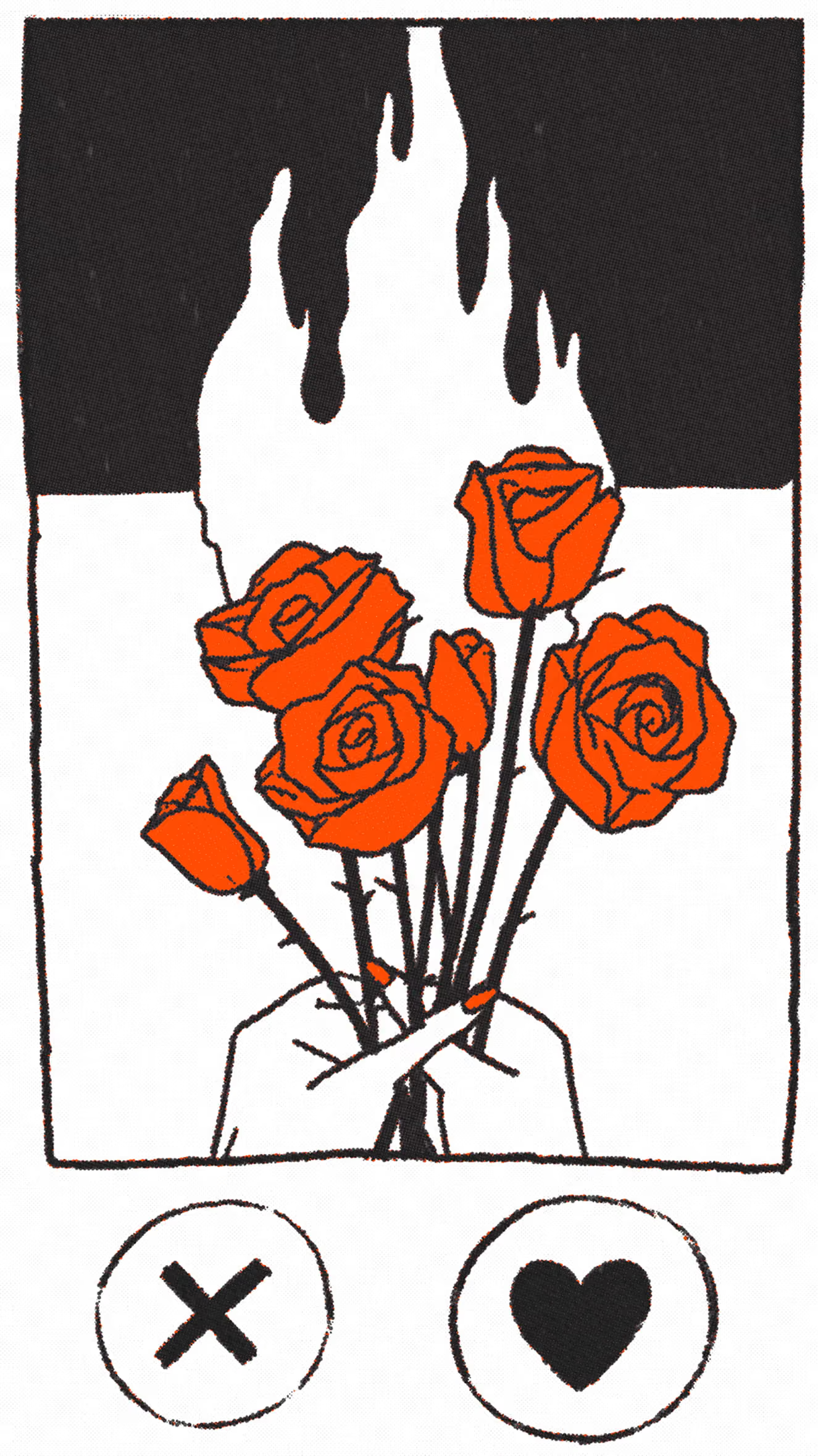
Disclosure: These aren’t really universal red flags; just common ones. So if you are guilty of any of these things, don’t worry — there’s likely someone out there who’d be happy to look past it for you — someone like A (40M), who says it would take a lot for him not to go on a date with a match.
“I’d have to see their mugshot on the news right before I went out on a date with them, and even then, I’d want to know what they did before canceling.”
🚩Photos of your ex still on your social media
Almost everyone agreed that leftover ex photos are a dealbreaker — the one exception was S (40F), who's genuinely still friends with most of her exes and doesn't feel like it’s a problem. But B (39F) points out, “It’s a time decay.”
Example: Photos of you with your high school prom date? Kind of cute. Photos of you with your ex from a few years ago? Not so much.
🚩Photos of you partying on your dating profile
Ditch the solo cup selfie, because it’s probably not doing you any favors. R (27M) says, “It just makes me think they're just not serious about dating. Some people will have a handle of Deep Eddy or something in their picture, and I'm like, ‘...are you in college?’”
🚩A curated grid or large following on social media
This is a controversial one. Matchmaker Jess says, “So many women that tell me that their dream guy has a flip phone.” And she gets a similar request from her male clients — that they don’t want to date a woman with a lot of followers.
“I don't want to say it's because they're insecure, but when a woman is really visible online, she has tons of options coming at her. Or maybe he's worried that their life will be put on display.”
🚩Only talking about yourself on a date
Failing to show interest in your date is another turn-off. R (27M) says he’s gone on a few dates with women who mostly talked about themselves and didn’t ask him any questions. And if they did, they immediately turned the conversation back to themself.
“They'd be like, ‘How's your day going?’ And I’ll be like, ‘Good!’ and then they’ll be like, ‘Oh, my day's also going good.’"
🚩Being creepy, rude, or not reading the vibe
Things like spam-liking someone’s old Instagram photos or sending them a DM when they’ve unmatched you on a dating app come off as weird. Also, being rude — to your date or to someone like a restaurant server — is a no-go.
S (40F) describes a situation where she left a bad date, and the man, failing to read her signals, followed her to her car. “He used his arm to block me from getting into the car, and went in for a kiss.”
“In the middle of the date, he also said, ‘Most women aren’t funny, but you are.’”
Read the room. Don’t be rude.
The Cold Approach: So Hot RN?
With all the complaints (and frankly, horror stories) about the apps out there, it's no surprise that some people are going back to the classic method of just walking right up and talking to someone.
For starters, cold approaching someone like this is a surefire way to prove they’re not a catfish (or AI). It’s also a good way to avoid the pre-date messaging ritual that tends to happen on the apps.
A (40M) says that he’s started approaching women in public more often recently. It's going pretty well — he’s gotten plenty of rejections, sure, but every so often he has an interaction that turns into a real date.
On the other side of the experience, S (40F) confirms that she’s been cold approached more often than usual lately. I asked her if she likes this method of meeting someone, and she said, "It really just depends on how they do it."
F (29F) agrees and says she enjoys approaching people, but she’s rarely approached herself. "There are no suave men anymore. Maybe I should teach a class, because I’m actually really good at approaching people," she jokes.
This doesn’t mean you should delete the apps and start talking to strangers at bars. (Wait until F drops the class to do that.) For now, keep the apps, but keep your eyes open too, because as matchmaker Jess says, “Your best match is about three degrees of separation away.”
That means they could be in the People You May Know section of Instagram. It also means they could be a regular at your favorite coffee shop. You never know, so it's worth looking up from your phone every once in a while.
🚩Photos of you partying on your dating profile
Ditch the solo cup selfie, because it’s probably not doing you any favors. R (27M) says, “It just makes me think they're just not serious about dating. Some people will have a handle of Deep Eddy or something in their picture, and I'm like, ‘...are you in college?’”
🚩A curated grid or large following on social media
This is a controversial one. Matchmaker Jess says, “So many women that tell me that their dream guy has a flip phone.” And she gets a similar request from her male clients — that they don’t want to date a woman with a lot of followers.
“I don't want to say it's because they're insecure, but when a woman is really visible online, she has tons of options coming at her. Or maybe he's worried that their life will be put on display.”
🚩Only talking about yourself on a date
Failing to show interest in your date is another turn-off. R (27M) says he’s gone on a few dates with women who mostly talked about themselves and didn’t ask him any questions. And if they did, they immediately turned the conversation back to themself.
“They'd be like, ‘How's your day going?’ And I’ll be like, ‘Good!’ and then they’ll be like, ‘Oh, my day's also going good.’"
🚩Being creepy, rude, or not reading the vibe
Things like spam-liking someone’s old Instagram photos or sending them a DM when they’ve unmatched you on a dating app come off as weird. Also, being rude — to your date or to someone like a restaurant server — is a no-go.
S (40F) describes a situation where she left a bad date, and the man, failing to read her signals, followed her to her car. “He used his arm to block me from getting into the car, and went in for a kiss.”
“In the middle of the date, he also said, ‘Most women aren’t funny, but you are.’”
Read the room. Don’t be rude.
The Cold Approach: So Hot RN?
With all the complaints (and frankly, horror stories) about the apps out there, it's no surprise that some people are going back to the classic method of just walking right up and talking to someone.
For starters, cold approaching someone like this is a surefire way to prove they’re not a catfish (or AI). It’s also a good way to avoid the pre-date messaging ritual that tends to happen on the apps.
A (40M) says that he’s started approaching women in public more often recently. It's going pretty well — he’s gotten plenty of rejections, sure, but every so often he has an interaction that turns into a real date.
On the other side of the experience, S (40F) confirms that she’s been cold approached more often than usual lately. I asked her if she likes this method of meeting someone, and she said, "It really just depends on how they do it."
F (29F) agrees and says she enjoys approaching people, but she’s rarely approached herself. "There are no suave men anymore. Maybe I should teach a class, because I’m actually really good at approaching people," she jokes.
This doesn’t mean you should delete the apps and start talking to strangers at bars. (Wait until F drops the class to do that.) For now, keep the apps, but keep your eyes open too, because as matchmaker Jess says, “Your best match is about three degrees of separation away.”
That means they could be in the People You May Know section of Instagram. It also means they could be a regular at your favorite coffee shop. You never know, so it's worth looking up from your phone every once in a while.