.avif)

.avif)
Content With Consequences: The Creator Who Broke Into Houses for Views

Some names and identifying details have been changed. Not because we're worried about hurting feelings. Because the woman at the center of this story asked not to spend the rest of her life explaining why she used to climb through strangers' windows for TikTok.
The first time she did it, she got 40k views; the second time, 150k. By the eighth, she had a catchphrase.
By the last one, she had handcuffs.
We'll call her Harper Reed, the name she picked when she agreed to tell us this story anonymously. The same way she once picked a fake name for TikTok because, in her own words, "I knew what I was doing was probably illegal."
Probably. That's the funny thing about internet fame. People spend years convincing themselves that obvious crimes are actually just content. Especially when the algorithm keeps rewarding them for it.
The House That Started it All
It was Nashville. One of those booming neighborhoods where entire streets seemed to materialize overnight. Framing. Drywall. Fresh paint. Million-dollar kitchens wrapped in protective plastic. Homes waiting for owners who haven't moved in yet.
Harper was 23. Working a forgettable day job, and wishing she were anywhere else.
Then one night, driving home after a bad day, she spotted a half-finished luxury home. The side gate was open, and nobody appeared to be around.
So she walked in.
"I honestly thought it'd be funny if I acted like I was a real estate agent," she says.
She filmed herself wandering through unfinished rooms. Opening random closets. Making jokes about absurd kitchen islands. Pretending to sell the house to imaginary buyers.
"Over here, we have a beautiful open concept floor plan for people who hate privacy."
"This bathroom is larger than my current apartment."
"If you can't afford this home, just cry in the pantry."
She created a TikTok account under a pseudonym on the spot and posted it. The video exploded. Thousands of likes. Hundreds of comments. People loved it.
And that's when the dangerous little voice arrived. “Do it again.”
Protecting her Identity
From the beginning, Harper understood there was a difference between being anonymous online and being unrecognizable in real life.
So she built layers.
Not enough to fool law enforcement or anyone determined to identify her. Just enough to make herself feel safe.
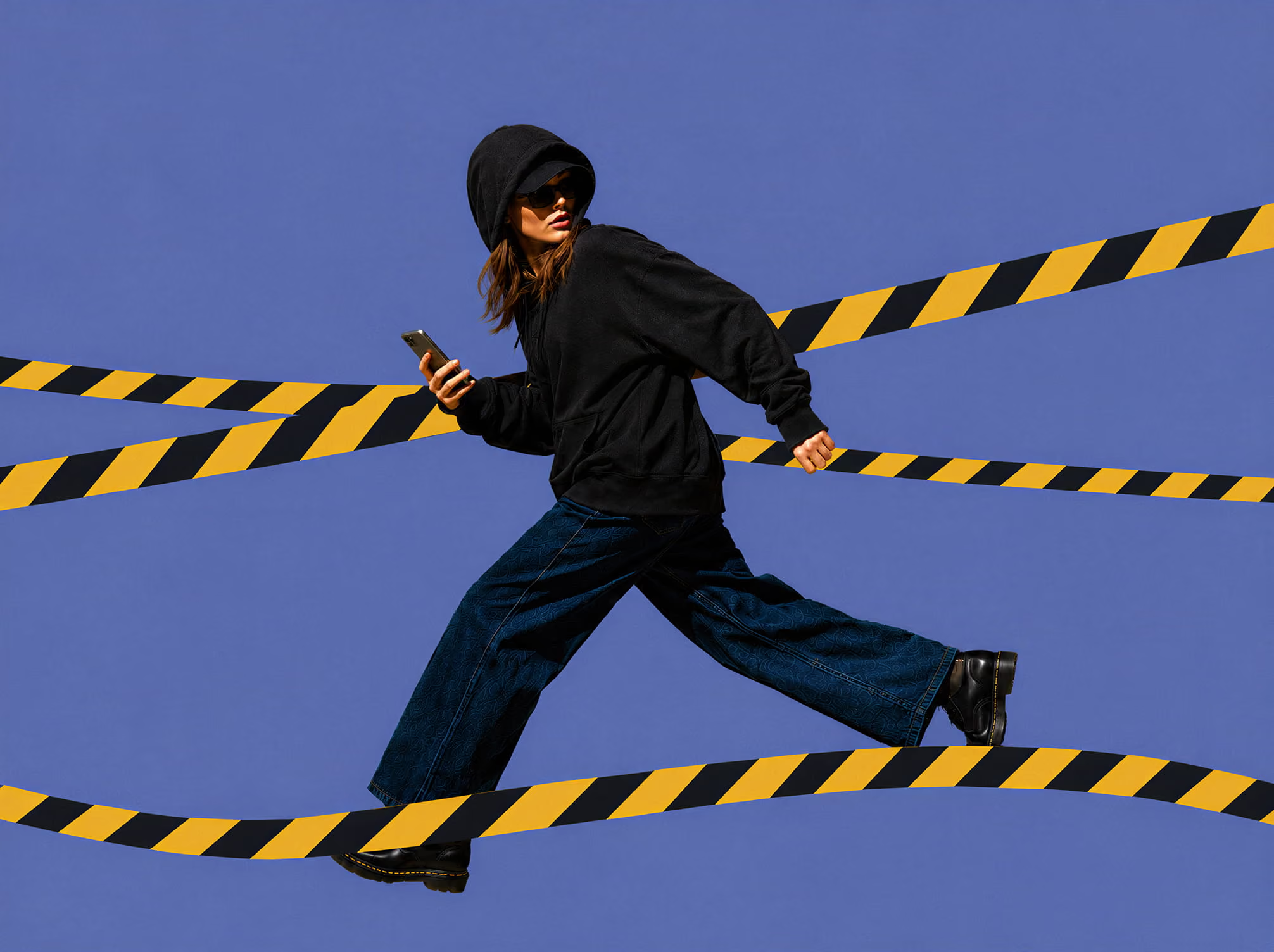
A baseball cap. Oversized hoodies. Cheap glasses she didn't actually need.
She avoided showing her car and never filmed street signs.
She blurred builder logos or filmed around them. She never connected this account to personal social profiles.
Harper said. "Otherwise, why was I hiding?"
Followers knew her only as a mysterious Nashville creator who somehow kept finding her way inside giant luxury homes after dark.
The anonymity made the videos feel more dangerous.
Danger makes people watch.
The Content Escalation Machine
The internet doesn't reward moderation, but it surely rewards escalation. One house became three. Three became ten. Ten became a series.
The series became her identity.
Soon, followers were sending addresses. New developments, fresh construction, model homes, spec houses, and luxury builds.
"If there was a nearby neighborhood with cranes, somebody would DM me."
At first, she convinced herself nobody was being hurt. After all, she would only ever film in homes that were still under construction.
Nobody lived there. Nothing was stolen. Nothing was broken. Most entries were embarrassingly easy.
An unlocked backdoor, or a construction entrance, or a garage door she could shimmy under, or an ajar window.
“I never damaged anything entering,” Harper said. “If it was too difficult to get in, I’d skip that house.”
Sometimes she'd wander around empty kitchens. Sometimes she'd film "midnight mansion reviews." Sometimes she'd sneak into completed model homes and treat them like an Airbnb she didn't own.
One night, she swam in a model home pool. Another time, she hosted a fake dinner party using display furniture.
Comments celebrated her. Called her fearless. Called her hilarious. Called her iconic.
Rarely did someone call her a trespasser.

The Lies We Tell Ourselves
The mantra that kept everything running was simple. These houses don't belong to anyone yet.
Except some of them did. Many did.
Custom builds are often sold long before completion. Families were waiting for keys. Owners were checking progress. People were investing millions into properties Harper treated like props.
"There were definitely houses where I later found out someone already owned it," Harper said. "And I just didn't want to think about that."
The ability to convince yourself that if you don't ask questions, you don't have to feel guilty about the answers came in clutch here.
The internet is full of creators doing exactly that with harassment, scams, dangerous pranks, fake emergencies, and public humiliation.
The content comes first. The consequences become somebody else's problem.
Until they’re yours.
Wasn’t she Afraid of Getting Caught?
Why wasn't Harper terrified that one of the owners would see the videos? Because, at least in her mind, there was no way to connect the dots.
“Most of the homes looked interchangeable,” Harper said. “White exteriors. Floating staircases. One marble bathroom starts looking a lot like the next.”
The same five shades of expensive.
She intentionally avoided showing house numbers and recognizable landmarks. Sometimes, she'd wait weeks before posting footage so nobody could connect a video to an active construction site.
To Harper, the homes were content inventory. Not somebody's dream or largest financial investment. Just another upload scheduled for Tuesday.
That psychological shift is what made everything possible.
And when consequences become invisible, almost anything starts feeling reasonable.
Of course, there had been warning signs.
One night, she heard a vehicle pull into a driveway while she was filming upstairs. She killed her ring light and hid in a walk-in closet for nearly 15 minutes.
Another time, a contractor unexpectedly arrived at a property while she was recording a voiceover in the kitchen. She slipped out through a side door before being spotted.
The Night it Ended
Most who play chicken with consequences eventually lose.
Harper's loss happened on a Thursday evening. The house was nearly complete — massive windows. Luxury finishes. Three stories.
Perfect for content.
A door was unlocked. So she entered. Camera rolling, narration already planned.
But people notice strangers walking through dark construction sites with ring lights. Someone called the police.
"I remember seeing flashlights and immediately knowing my life was over,” Harper said.
No cinematic escape to speak of.
“Picture a grown woman standing in a stranger's luxury home explaining to police officers that she was there for content,” she said.
Now imagine explaining it while being handcuffed.
The character she'd built and the account she'd put six months into ended. She was arrested and charged with misdemeanor trespassing.
That final video never got posted. The story never became national news.
The legal consequences weren't catastrophic. But Harper paid thousands in legal fees. She completed probation and community service requirements.
"It wasn't some dramatic prison sentence," she said. "It was worse in a way because it was embarrassing.”

Gone Without a Trace
The following week, she deleted her entire profile. Nearly 50 videos. Millions of accumulated views.
Gone.
"People always think the arrest is the worst part,” she said. "It wasn't. The worst part was realizing I'd spent months becoming known for something I was secretly ashamed of, even if it wasn’t associated with my real identity.”
The account that consumed her life vanished overnight.
People will risk careers, relationships, arrests, reputations, and sometimes freedom for attention that evaporates before the consequences do.
The Internet's Most Dangerous Drug
Social media has created a strange moral loophole. If enough people laugh, clap, share, and comment, the behavior starts to feel legitimate.
Views become permission. Engagement becomes justification. Virality becomes absolution.
Until reality arrives carrying paperwork. Or lawsuits. Or criminal charges. Or victims.
The creator economy is filled with stories like Harper's. It has produced influencers who fake kidnappings, stage robberies, harass strangers, vandalize businesses, terrorize neighborhoods, and livestream behavior that would've gotten them institutionalized 20 years ago.
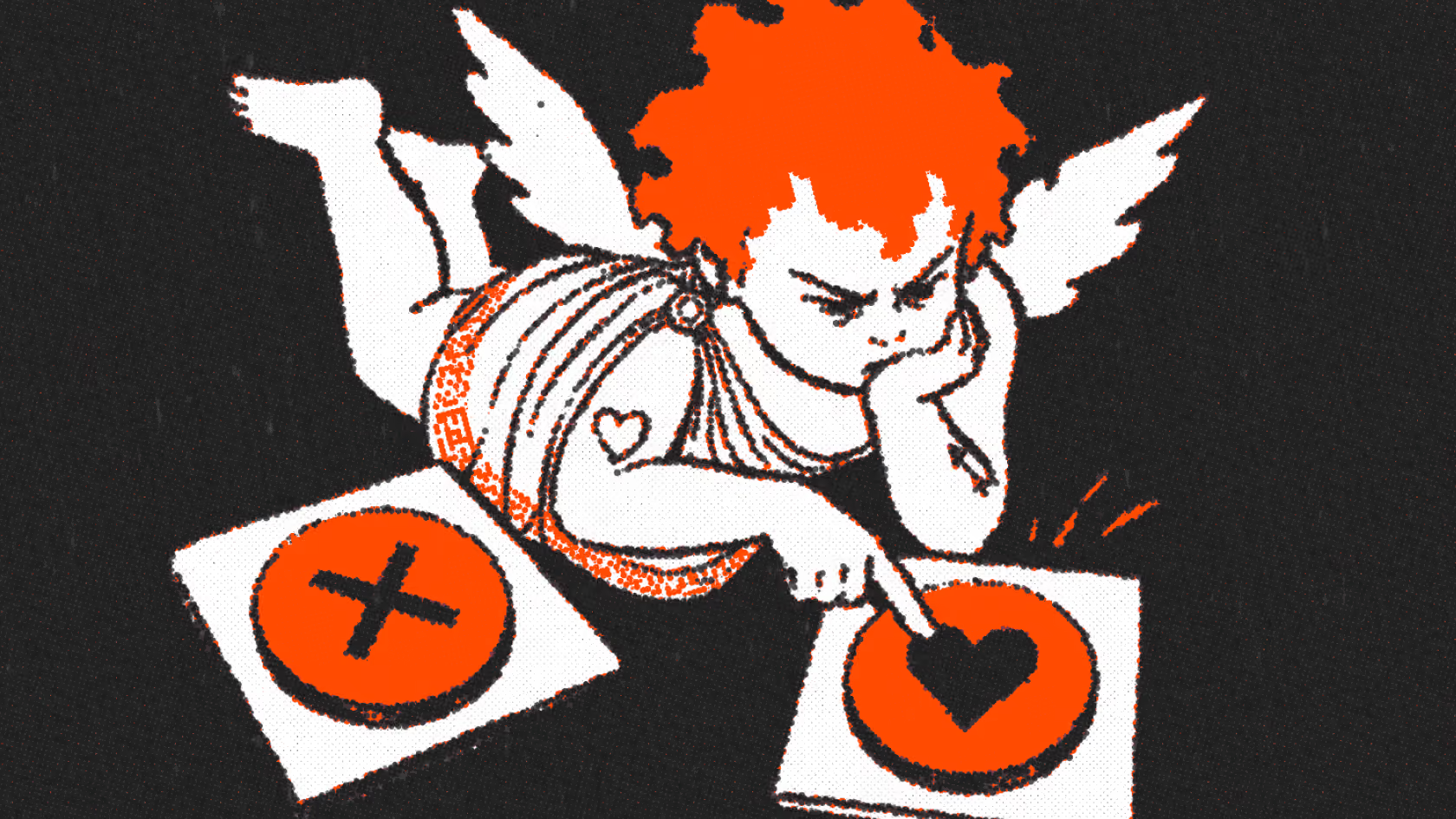
We’ve trained an entire generation to ask a terrifying question: "Would this get views?"
Not: "Should I do this?"
Not: "Is this legal?"
Not: "What happens if I'm caught?"
Only: "Would it perform?"
For every creator who becomes famous doing something reckless, thousands more learn the same lesson:
The algorithm doesn't care if something is legal.
The algorithm doesn't care if something is ethical.
The algorithm certainly doesn't care if you're about to ruin your life.
It only cares whether people watch.
The Neighborhoods are Full Now
Today, Harper leads a normal life and has a very inactive social media presence.
She thinks most of her audience probably forgot she ever existed.
But every now and then, she'll drive through one of the neighborhoods where she used to film.
The construction fences are gone now. The dirt lots have become lawns. The empty shells have become homes. Kids ride bikes down streets she once wandered, carrying a ring light. Families host barbecues in backyards she once used as a filming location.
One afternoon, she passed a little girl drawing with sidewalk chalk in the driveway of a house she'd entered years earlier.
"It felt harmless when it was happening," Harper said. "Honestly, I think most terrible ideas do."
The internet loves to tell creators to take risks. Push boundaries. Do what nobody else is doing.
Fair enough.
Just remember that the algorithm never has to deal with the consequences. You do.